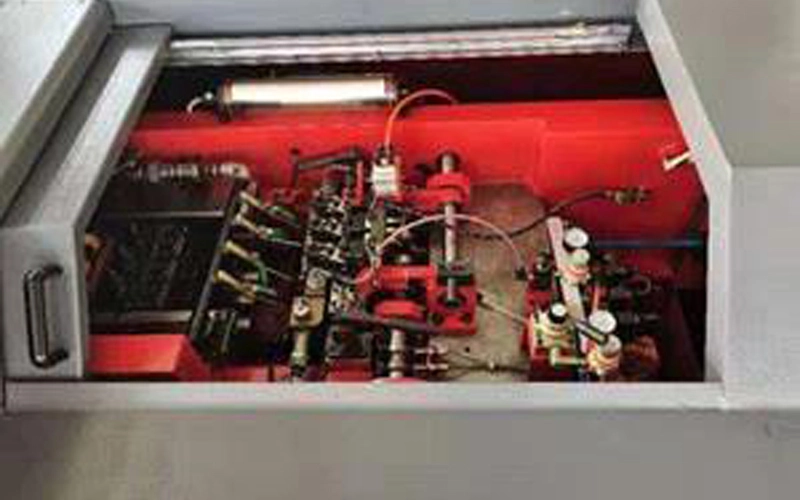
Cold forming—also known as cold heading or cold forging—is one of the most efficient and cost-effective metal forming processes used today for producing bolts, screws, fasteners, and special-shaped components.
For manufacturers seeking high-volume production, high strength, minimal waste, and consistent quality, cold forming often outperforms traditional methods like machining, casting, hot forging, or welding. As a professional cold heading machine manufacturer, Shinetop Machinery has helped hundreds of fastener factories, automotive suppliers, and hardware producers establish high-efficiency cold forming production lines. This article explains the cold forming process and provides practical guidance on selecting the right equipment.
What Is Cold Forming: Definition & Core Principle
Cold forming is a forging process executed at or near room temperature (well below the metal’s recrystallization temperature).
The process begins with coiled wire: the wire is sheared to a precise length (blank), then fed through a series of tool/die cavities. Inside these dies, the metal is plastically deformed — compressed, extruded, upset, or extruded backward — to reshape its geometry (change diameter, length, add heads or features).
During deformation, the metal is stressed beyond its yield strength (so it deforms permanently), but not beyond its tensile strength (to avoid fracture).
Because there’s no melting or heating, the metal’s internal grain structure remains continuous (grain flow stays intact), which leads to stronger, more fatigue-resistant parts.
In simpler terms: cold forming is “shaping without heat,” using pressure to reshape metal at room temperature — ideal for fasteners and high-volume precision parts.
How Cold Forming Works: Primary Methods
Cold forming isn’t just one technique — it’s a family of methods. The three most commonly used deformation methods are:
Forward Extrusion
Metal flows forward along the direction of the punch through a die that reduces diameter or reshapes the cross-section. Useful for tapering or reducing diameter.
Backward Extrusion
Also called reverse extrusion: metal flows backward relative to punch movement, often to create hollow shapes, recesses, or internal cavities (e.g. hollow bolts, cups).
Upsetting (Cold Heading)
Used to form heads, flanges, collars — e.g. bolt heads, rivet heads — by compressing and displacing metal at the end of the blank. This is the classic “cold heading” fastener method.
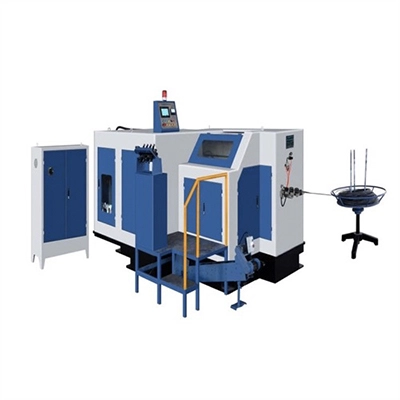
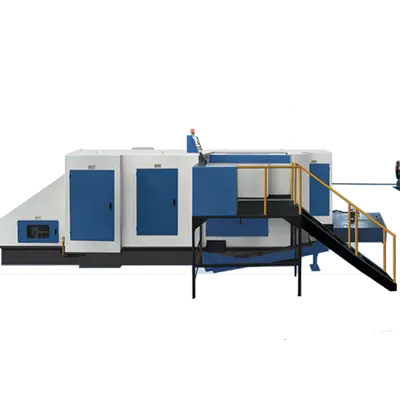
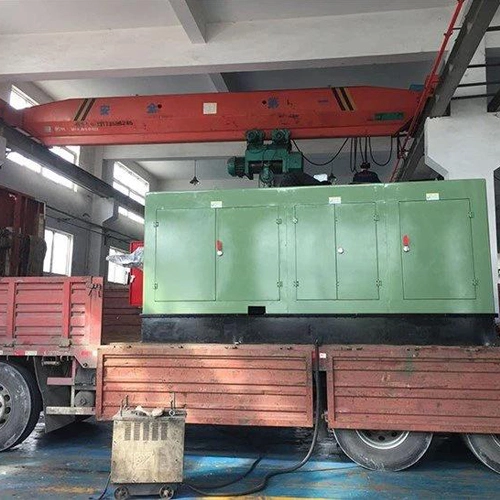
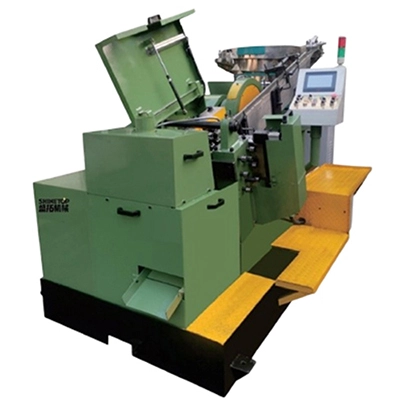
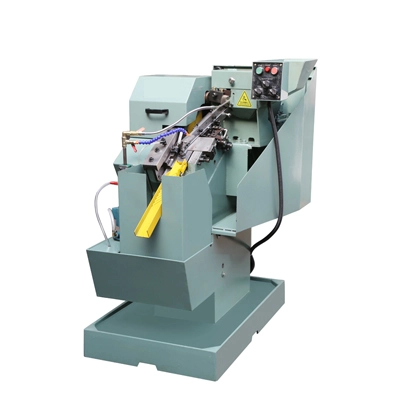
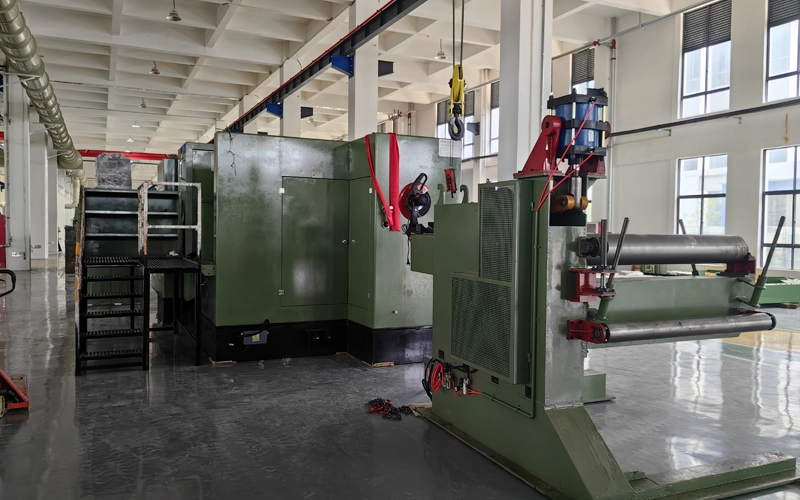
Modern multi station cold forging machine combines these methods: a blank might be upset to form a head, then extruded or backward-extruded to form hollow/complex shapes — all in one automated sequence as the blank moves through successive die cavities. This capability is crucial for manufacturing complex parts (e.g. flange-bolts, hollow bolts, special-shaped components) at high speed.
Why Use Cold Forming? Key Advantages
Cold heading machines can produce 80–350 pieces per minute, depending on part size and material.
Unlike machining—where most material becomes chips—cold forming reshapes metal with almost no scrap.
Continuous grain flow
Higher tensile strength
Better fatigue resistance
Improved shear strength
These characteristics make cold-formed fasteners more durable than machined or cast versions.
Cold forming delivers smooth surfaces and tight tolerances—often eliminating secondary machining.
Since no heating is involved, energy consumption is lower than hot forging.
Faster cycles, less waste, minimal finishing — all contribute to lower overall cost per part.
Materials Suitable for Cold Forming
Cold forming works well for a broad range of metals. Common materials include: carbon steels, alloy steels, stainless steel, copper, brass, bronze, aluminum, nickel-based alloys, and even some aerospace-grade alloys.
Because cold forming retains grain continuity and induces work hardening, it's particularly effective for materials where strength, fatigue resistance, and minimal variation are critical.
That said, material selection must account for ductility, cleanliness, uniform cross-section, surface finish of the wire/rod, and suitability for high-pressure deformation — before tooling design and machine selection.
Cold Forming vs Other Manufacturing Methods
| Process | Benefits | Limitations |
| Cold Forming (Cold Heading) | Highest production speed, low waste, strongest mechanical properties | High tooling cost; requires high-quality wire |
| Hot Forging | Easier deformation, suitable for large parts | Requires heating, oxidation, lower accuracy |
| Machining | Flexibility, high precision | High waste, slower, weaker grain flow |
| Casting | Good for complex shapes | Porosity risk, lower strength, needs machining |
For manufacturers focusing on fasteners and mass-produced components, cold forming delivers the best long-term efficiency and cost performance.
Cold Forming Machinery: What to Know When Buying / Specifying
If you’re considering buying a cold heading machine (or specifying machinery for a new production line), important parameters to consider include:
Cutoff / blank diameter capacity: e.g. 2 mm up to ~48 mm (depending on machine)
Feed / blank length capability: from a few mm up to 300 mm+ for long bolts/screws or special parts.
Tonnage (press force capacity): depending on material hardness, diameter, and deformation required — typical machines may range from modest tonnage for small fasteners to heavy-duty presses for large bolts or alloy steels.
Number of stations (dies / blows): Many modern machines are multi-station headers — e.g. 3-die/3-blow, 4-die/4-blow, 5-die/5-blow, 6-die/6-blow etc. The more stations, the more complex shapes you can produce in one cycle.
Tooling quality & precision die design: Critical for dimensional accuracy, repeatability, and die life — especially when forming high-strength or alloy materials.
Material compatibility: Depending on what metals you plan to form (carbon steel, stainless, non-ferrous, alloys, etc.), you may need more robust tooling, better lubrication and possibly more tonnage.
Why Choose Shinetop Machinery as Your Cold Heading Machine Supplier
As a leading manufacturer of cold forming and cold heading equipment, Shinetop provides complete solutions for fastener factories and hardware manufacturers.
Our Advantages
1. Full Range of Machines
Shinetop Machinery offers a full line of multi-station cold heading and bolt forming machines designed to meet diverse manufacturing needs:
Three Die Three Blow Bolt Forming Machine – Ideal for standard bolts, nuts, rivets, and small fasteners
Four Die Four Blow Bolt Forming Machine – Suitable for complex bolt shapes, flange bolts, and medium-sized fasteners
Five Die Five Blow Bolt Parts Forming Machine – Efficient for mass production of bolts, nuts, nails, rivets, steel balls, and special-shaped parts
Six Die Six Blow Bolt Parts Forming Machine – Handles large-diameter bolts and high-volume production with precision and stability
Seven Die Seven Blow Bolt Parts Forming Machine – Designed for heavy-duty and complex multi-step forming, including hollow or special fasteners
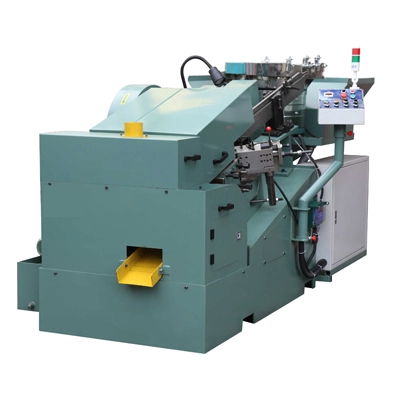
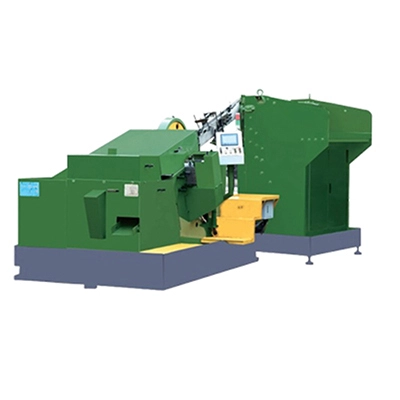
Multi-Station Parts Cold Forging Machine – Versatile for different shapes, high efficiency, minimal maintenance, and suitable for mass production
These machines are widely used for automotive bolts, flange bolts, special fasteners, stainless steel screws, and other high-strength parts.
2. High-Speed & Stable Performance
Reinforced frames + precision lubrication + servo feeding ensure long-term, stable operation.
3. Strong Engineering Support
We assist with:
Part evaluation
Die design suggestions
Machine selection
Production line planning
4. Custom Solutions
Shinetop can customize tonnage, stations, feeding systems, and special tooling.
5. Global Export Experience
Machines exported to Southeast Asia, Europe, South America, Middle East, and Africa.
FAQs
Q1: Is cold forming the same as cold heading?
Cold heading is a major part of cold forming, but cold forming also includes forward and backward extrusion. For simple bolts, "cold heading" is correct; for complex parts, "cold forming" is more accurate.
Q2: Can cold forming produce stainless steel fasteners?
Yes. With proper lubrication, higher tonnage, and quality dies, cold forming is excellent for stainless steel.
Q3: What size bolts can be produced?
Our machines typically cover M3–M24, depending on the model.
Q4: Do cold-formed parts need secondary machining?
Most do not. Only threads or specific precision surfaces may require finishing.
 English
 中文
中文
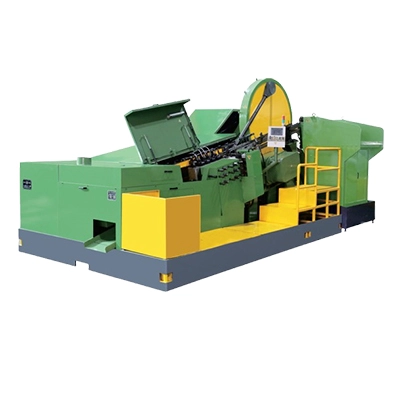 Thread Cold Rolling Machine
ST-4R-50 High-Speed Thread Rolling Machine ST-8R-83(120) High-Speed Thread Rolling Machine ST-6R-80 High-Speed Thread Rolling Machine ST-4A-50 High-Speed Thread Rolling Machine ST-4A-25 High-Speed Thread Rolling Machine ST-10N-150 High-Speed Thread Rolling Machine ST-30N High-Speed Thread Rolling Machine ST-60N(M16-150) High-Speed Thread Rolling Machine ST-60N(M16-200) High-Speed Thread Rolling Machine ST-12N-150 High-Speed Thread Rolling Machine ST-3A-25 High-Speed Thread Rolling Machine ST-3 High-Speed Thread Rolling Machine ST-80N High-Speed Thread Rolling Machine ST-90S High-Speed Thread Rolling Machine ST-100-M40 High-Speed Thread Rolling Machine ST-70N End Milling Machine
Thread Cold Rolling Machine
ST-4R-50 High-Speed Thread Rolling Machine ST-8R-83(120) High-Speed Thread Rolling Machine ST-6R-80 High-Speed Thread Rolling Machine ST-4A-50 High-Speed Thread Rolling Machine ST-4A-25 High-Speed Thread Rolling Machine ST-10N-150 High-Speed Thread Rolling Machine ST-30N High-Speed Thread Rolling Machine ST-60N(M16-150) High-Speed Thread Rolling Machine ST-60N(M16-200) High-Speed Thread Rolling Machine ST-12N-150 High-Speed Thread Rolling Machine ST-3A-25 High-Speed Thread Rolling Machine ST-3 High-Speed Thread Rolling Machine ST-80N High-Speed Thread Rolling Machine ST-90S High-Speed Thread Rolling Machine ST-100-M40 High-Speed Thread Rolling Machine ST-70N End Milling Machine