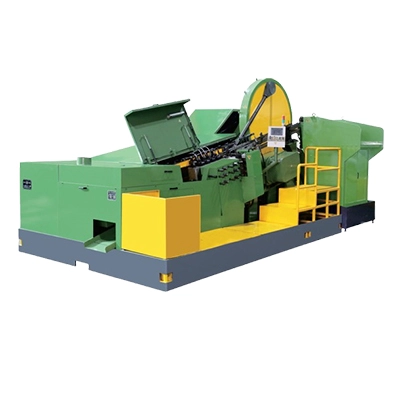
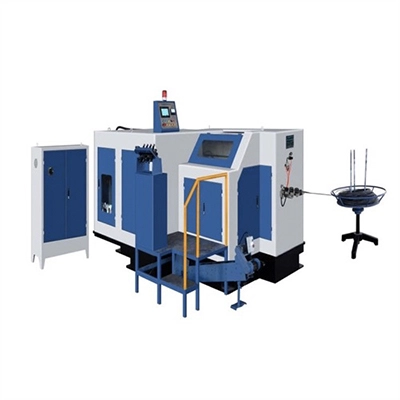
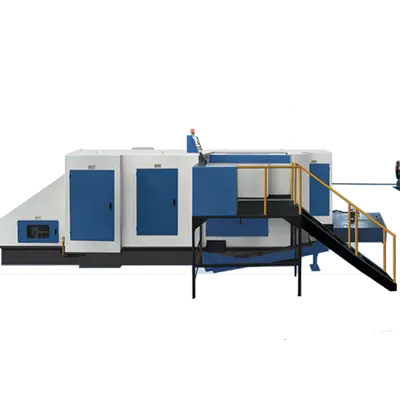
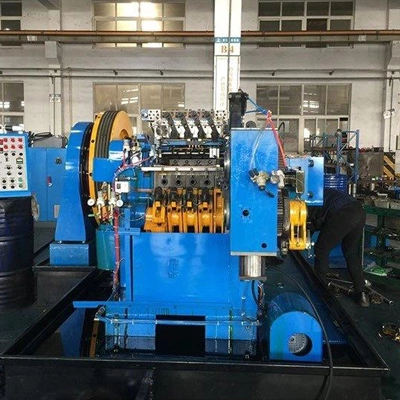
At Shinetop, we provide multi-station parts formers for manufacturers producing fasteners, bolt components, and complex cold-formed parts. Our 5-die 5-blow, 6-die 6-blow, and 7-die 7-blow series are designed for different forming requirements, from multi-step upsetting and extrusion to more complex part geometries.
We help customers select the right parts making machine based on the finished part size, length, geometry, material, forming sequence, and required output. Our published 5-die series covers M6 to M30 products with selected models supporting lengths up to 355 mm, while our 6-die series covers M8 to M24 with lengths up to 250 mm on listed configurations.
If you are producing a non-standard or complex part, send us your drawing and production requirements. We can help you evaluate the suitable multi-station machine configuration for your application.
The correct parts former configuration depends primarily on the number of operations required to transform the wire blank into the final geometry.
Configuration | Forming Stations | Published Product Range | Published Max. Length | Best Selection Logic |
5-Die 5-Blow | 5 | M6–M30 across published series | Up to 355 mm | Multi-step bolts and cold-formed parts |
6-Die 6-Blow | 6 | M8–M24 across published series | Up to 250 mm | Parts requiring an additional forming stage |
7-Die 7-Blow | 7 | Confirm by selected model | Confirm by selected model | Longer or more complex forming sequences |
More stations do not automatically mean a better machine for every product. A part that can be completed efficiently in five forming operations does not necessarily benefit from a six- or seven-station machine. The finished drawing and intended forming sequence should determine the machine configuration.
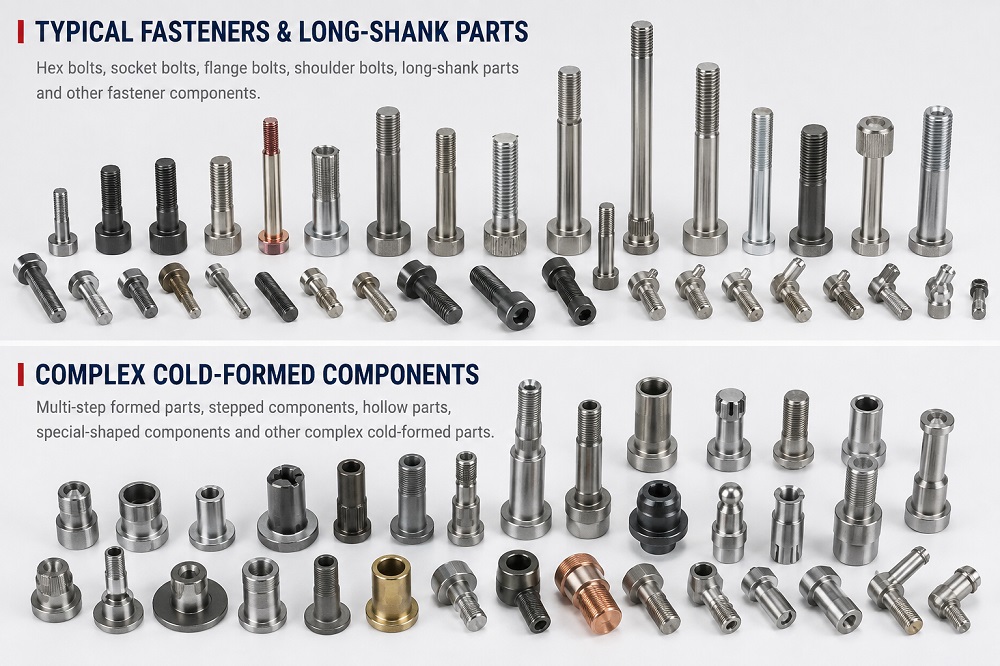
Our multi-station parts formers are designed for more than a single standard fastener shape. By changing the tooling and forming sequence within the machine's capacity, different cold-formed geometries can be evaluated.
Based on our existing production samples and machine range, typical applications can include:

Our published 5- and 6-die specifications include separate HEX and SOCKET product dimensions, confirming both as part of the intended forming range.
Selected 5-die configurations support product lengths up to 355 mm, providing options for longer cold-formed components within the published capacity range.
Components with several diameter transitions may require a sequence of controlled forming operations across multiple stations.
Different head shapes and local forming features can be produced through appropriate die and punch configurations.
For non-standard parts, we recommend starting from the finished component drawing rather than selecting a machine model first.
A parts former machine progressively transforms a wire blank through several dies. Each station performs a controlled step until the required geometry is formed.

Material is displaced to increase the cross-section locally, such as when forming a head or enlarged section.
Material can be redistributed to create reduced diameters, extended sections, recesses, or other appropriate geometries.
Rather than forcing the final geometry in one step, multi-station forming distributes the work across several dies and punches.
The component is transferred from one forming station to the next while maintaining the orientation required by the forming sequence.
The exact combination of operations depends on the finished part geometry, material, tooling, and machine configuration.
We separate our Bolt Former and Parts Former product families because they serve different forming requirements.
Bolt Former | Parts Former | |
SHINETOP Main Configurations | 3-Die / 4-Die | 5-Die / 6-Die / 7-Die |
Main Role | Bolt and suitable fastener forming | Longer multi-stage part forming |
Available Forming Stations | 3 or 4 | 5, 6 or 7 |
Selection Focus | Bolt size, head geometry and forming sequence | Part geometry and number of required forming operations |
Recommended First Step | Send bolt drawing | Send finished-part drawing |
If your project mainly involves bolts and standard fastener geometries, explore our bolt former machine.
If your component requires a longer multi-stage cold-forming sequence, a parts former may be the more appropriate starting point.
The structural materials used in a multi-station former influence rigidity, wear resistance, and long-term machine stability.
On applicable SHINETOP configurations, current specifications include:
Machine Component | Published Material / Component |
Machine Body | QT500 ductile iron |
Main Slider | QT600-3 |
Main Crankshaft | 42CrMo forged and nitrided |
Bearings | NSK on applicable configurations |
Bronze Bushings | ZQSn10-1 |
Clamping Plates | Lightweight aluminum alloy |
The material being formed affects the required forming load, tooling, production speed, and achievable geometry.
On applicable SHINETOP configurations, current product information includes materials such as:
Commonly used for standard fasteners and industrial cold-formed components.
Suitable for applications requiring higher material strength, subject to the forming requirements of the specific grade.
Can be evaluated for corrosion-resistant fasteners and parts within the appropriate machine and tooling capacity.
Suitable for selected lightweight cold-formed components.
Can be formed for suitable component applications.
Actual production capacity depends on the product geometry, material properties, and tensile strength of the wire. SHINETOP's published specifications explicitly note these variables.
Continuous parts forming depends on stable feeding, cutting, transferring, clamping, forming, and ejection—not only on nominal forming force.
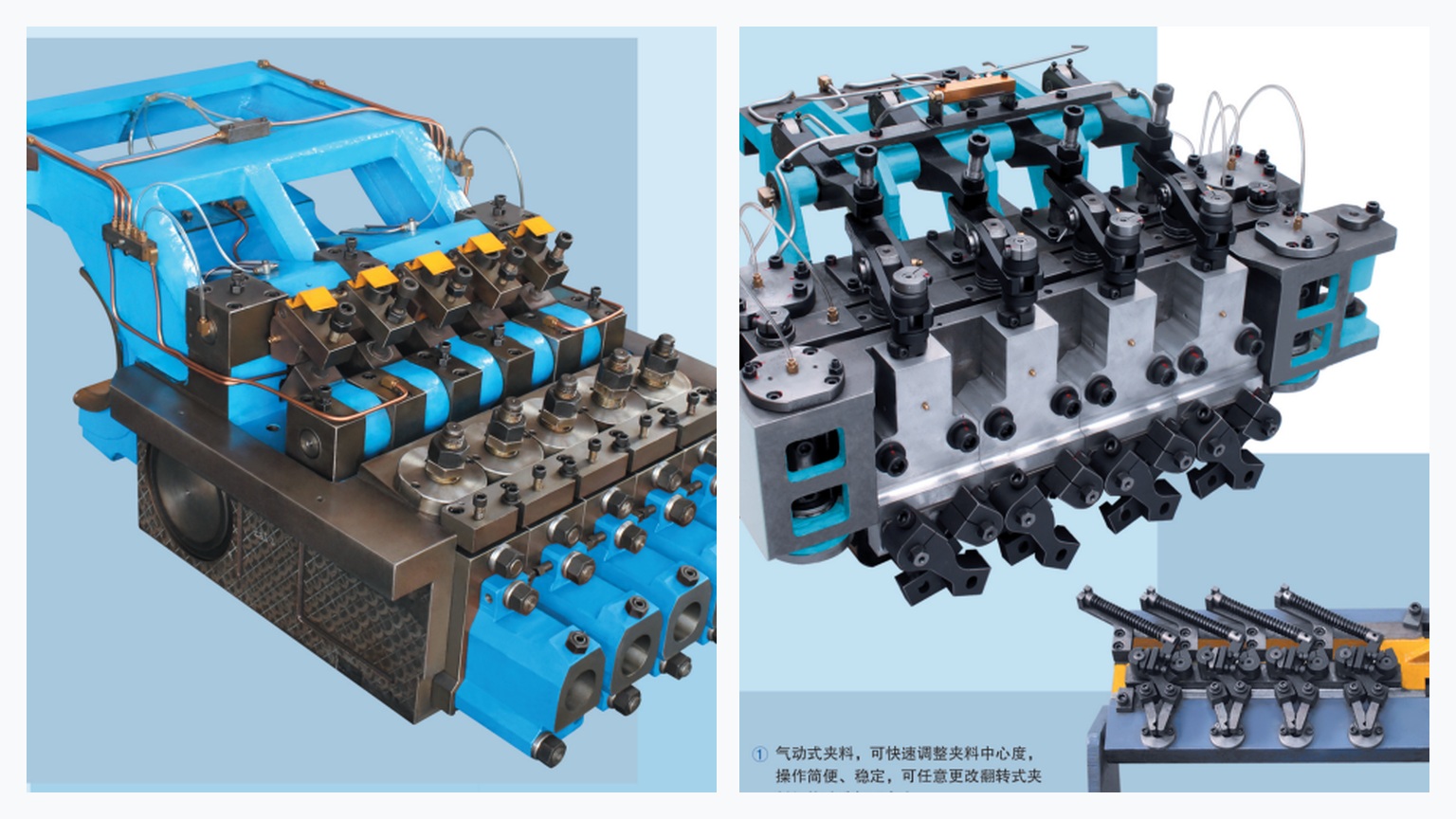
The transfer mechanism moves the workpiece between forming stations. Adjustable transfer fingers help adapt the transfer setup to different part geometries and forming sequences.
Consistent blank preparation is important before the material enters the forming sequence. Applicable machine structures combine controlled cut-off mechanisms with adjustable feeding systems.
Applicable SHINETOP configurations use pneumatic clutch systems to support controlled starting, smooth braking, single-stroke operation, and continuous running. The current parts former page also specifies PLC working-status monitoring and fault alarm functions.
On applicable configurations, punch ejection can synchronize with the retreat of the main slide, helping keep the formed component in the die until the appropriate ejection point.
The current machine design includes a rotary swing clamp with pneumatic actuation to support stable material clamping during transfer.
We provide 5-, 6-, and 7-die configurations for different multi-step forming requirements.
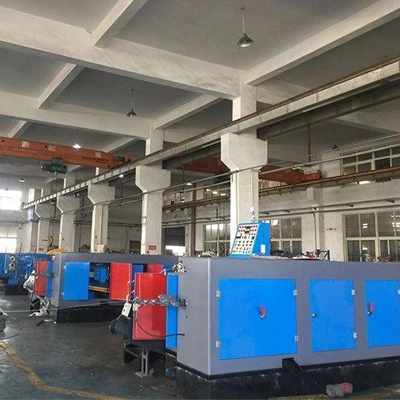
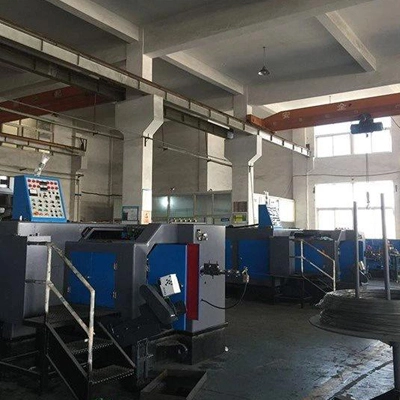
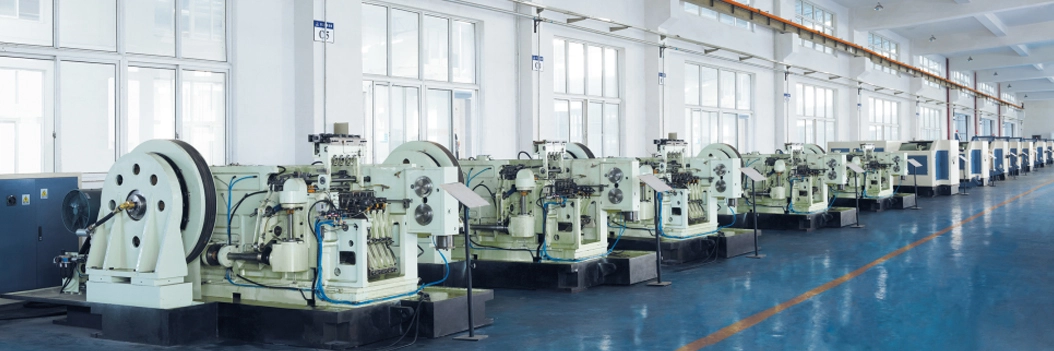
Our production facility supports machine-component machining, assembly, inspection, and complete machine preparation.
Our current production capacity supports standard equipment orders and customized forming projects.
Gantry machining, CNC machining, boring, large-lathe, and inspection equipment support production of critical machine structures.
For special or non-standard parts, we evaluate the finished drawing rather than recommending a machine solely according to a catalog model.
Our multi-station cold heading and forming machines are supplied to customers in international markets for fastener and industrial component manufacturing.
Control System: The frequency converter is from a well-known domestic brand, and the PLC is imported from the Mitsubishi brand in Japan.
Lubricating oil pump, cooling oil pump: Taiwan Zhiguan and other first-tier domestic brands.
Main transmission clutch: Shanghai Yuyi and other first-tier domestic brands.
Solenoid valves: Japan SMC; Small solenoid valves: Germany FTO.
Main motor: Anhui Wannan and other first-tier domestic brands.
Rollers and guide plates: Made of GA350, vacuum quenched as a whole, high strength, high wear resistance, and long life.
The machine uses a pneumatic clutch, which has a small starting current, smooth braking, and can achieve "point movement," "single stroke," and "continuous operation." Except for the point movement mode, the main slide can stop at the last point every time it stops, providing maximum operating space.
The punch die ejection can synchronize with the retreat of the main slide, which can temporarily keep the product in the die after molding to avoid being taken out by the punch die.
PLC numerical control detection device, which can automatically detect the machine's working status and fault alarm display.
The machine uses a rotary swing clamp with a pneumatic mechanism, making the clamping stable.
Contact us to find out how our advanced multi-station cold heading forming machine engineering solutions.
We can help your business.
Tel:
E-mail:
Address:
Pan Dai Xiawan Industrial Zone, Ruian City, Wenzhou Province