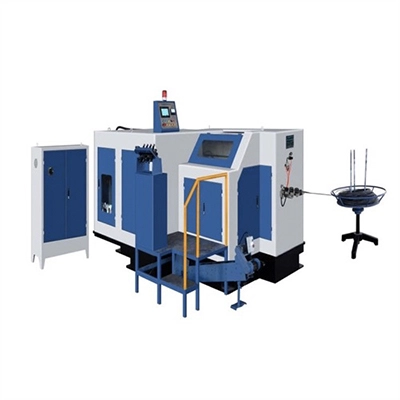
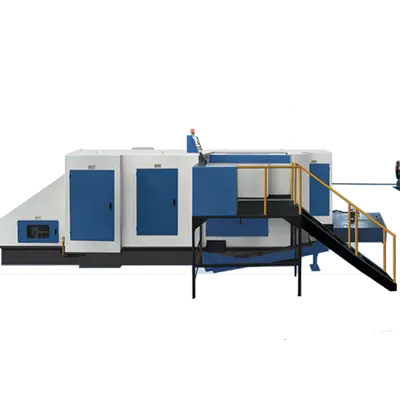
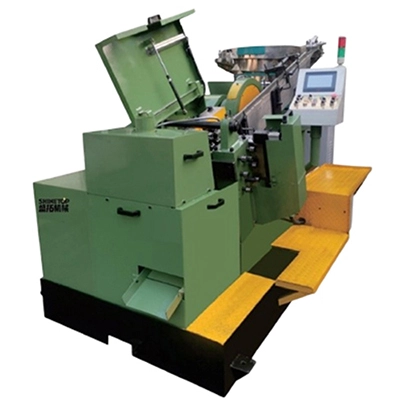
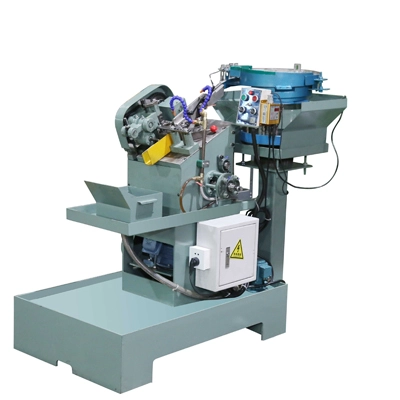
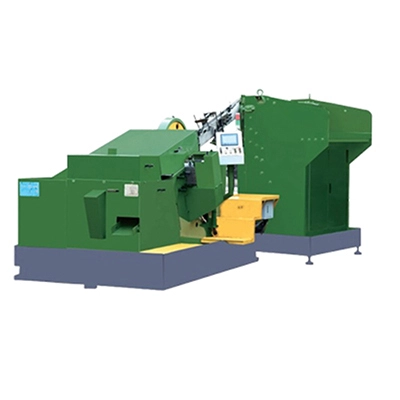
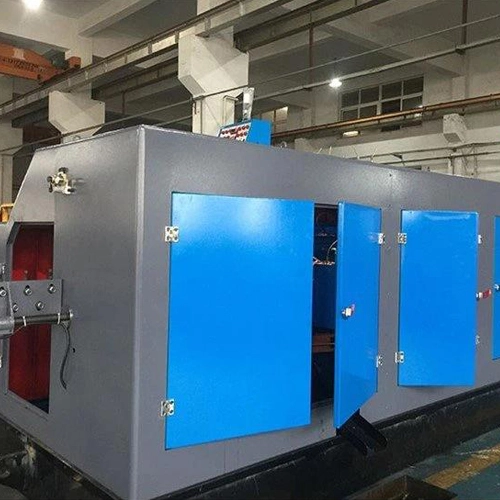
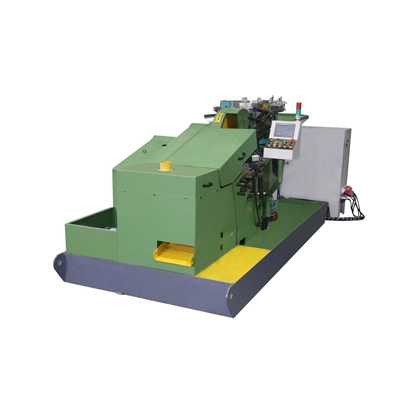
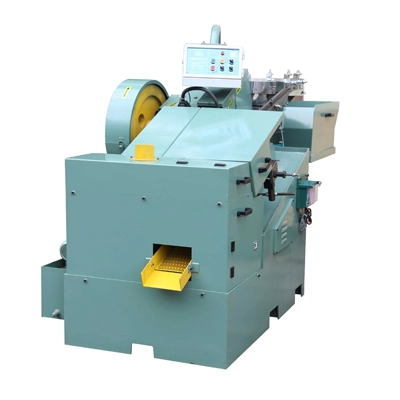
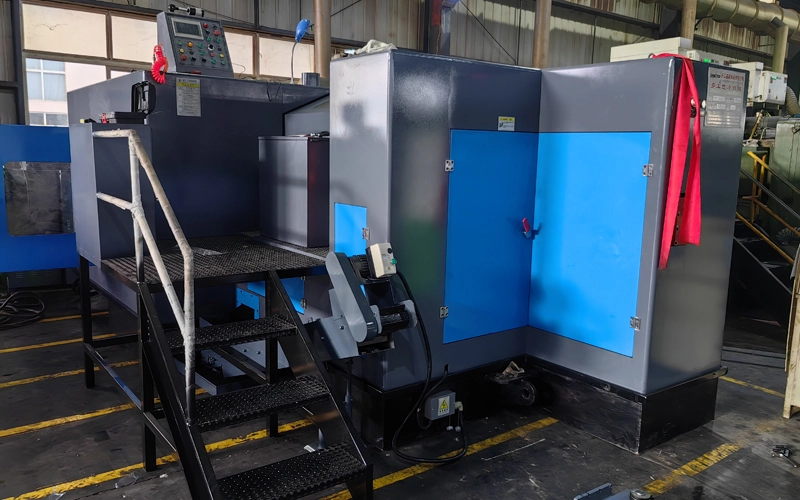
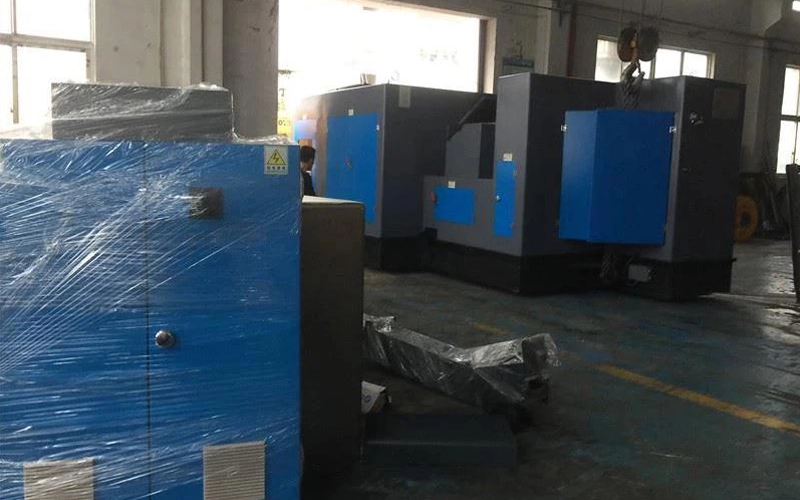
Thread manufacturing plays an essential role in industries that require strong, precise, and reliable fastening components. From automotive parts to construction equipment, high-quality threads are critical for ensuring connection strength and product performance. Understanding the types of thread rolling machine available on the market helps manufacturers choose suitable thread forming solutions for different production requirements.
Unlike traditional cutting methods, thread rolling uses pressure to reshape metal material without removing chips. This process improves material utilization, increases production efficiency, and enhances thread strength through improved grain flow. With the increasing demand for high-volume fastener production, advanced thread rolling machine technology has become an important solution for modern manufacturing.
This guide explains the working principles, main types, applications, selection factors, and future trends of thread forming equipment, helping manufacturers better understand how to choose suitable machinery for their production needs.
What Is a Thread Rolling Machine?
A thread rolling machine is industrial equipment designed to create external threads on metal components through a cold forming process. Instead of cutting material away, the machine applies pressure through hardened dies to reshape the workpiece surface and form accurate thread profiles.
The basic working principle involves placing a metal blank between two thread rolling dies. As the dies move and apply force, the material flows into the thread shape while maintaining its original structure. Because the process does not remove material, thread rolling provides better material efficiency compared with conventional machining methods.
A modern thread rolling system usually consists of several key components, including:
Rolling dies for thread forming
Feeding mechanism for automatic operation
Hydraulic or mechanical driving system
Control system for process adjustment
The advantages of using a thread rolling machine include higher production speed, improved thread strength, better surface finish, and reduced material waste. These benefits make thread rolling equipment widely used for manufacturing bolts, screws, studs, and other threaded components.
For manufacturers producing large quantities of fasteners, selecting the correct equipment from professional rolling machine manufacturers can significantly improve production efficiency and product consistency.
What Are the Main Types of Thread Rolling Machines?
Understanding the different types of thread rolling machine is important because each design offers unique advantages for specific production requirements. Machine selection usually depends on factors such as component size, production volume, thread specifications, and automation needs.
Flat Die Thread Rolling Machines
Flat die thread rolling machines are among the most commonly used thread forming systems. They operate by placing the workpiece between two flat dies, with one die moving horizontally to form the thread.
These machines are suitable for producing standard fasteners such as screws, bolts, and studs. Their simple structure, reliable performance, and relatively easy maintenance make them popular in many manufacturing environments.
Round Die Thread Rolling Machines
Round die thread rolling machines use cylindrical dies to form threads on rotating workpieces. This design allows continuous thread forming and is suitable for producing components with different lengths and diameters.
Compared with flat die systems, round die equipment offers greater flexibility for certain applications and is often used for specialized thread production.
Planetary Thread Rolling Machines
Planetary thread rolling machines use multiple rotating dies arranged around the workpiece. This structure enables high-speed production while reducing forming pressure requirements.
They are commonly used in large-scale production environments where high output and continuous operation are required.
The main differences between common thread rolling equipment types are shown below:
| Machine Type | Main Feature | Common Applications |
|---|
| Flat Die Thread Rolling Machine | Simple structure and stable operation | Bolts, screws, standard fasteners |
| Round Die Thread Rolling Machine | Flexible forming capability | Special threads and precision parts |
| Planetary Thread Rolling Machine | High-speed continuous production | Large-volume fastener manufacturing |
When evaluating types of thread rolling machine, manufacturers should focus on matching equipment capabilities with actual production requirements instead of choosing only based on price.
Thread Rolling Machine vs Cutting Thread Process
Thread rolling and thread cutting are two different manufacturing methods. While both can produce accurate threads, their production principles and performance characteristics are different.
A thread rolling machine forms threads by applying pressure, while cutting processes remove material using cutting tools. For high-volume manufacturing, thread rolling usually provides greater efficiency and better material utilization.
| Comparison Factor | Thread Rolling Process | Cutting Thread Process |
|---|
| Material utilization | Higher with minimal waste | More material removed |
| Production speed | Faster for mass production | Slower for large quantities |
| Thread strength | Improved through material flow | Depends on machining quality |
| Surface finish | Smooth thread surface | Requires additional finishing in some cases |
| Production cost | Lower for high-volume production | Higher machining requirements |
Because the rolling process strengthens the material structure around the thread area, rolled threads often provide better fatigue resistance compared with cut threads.
For manufacturers producing thousands or millions of threaded components, investing in reliable thread rolling equipment can improve production efficiency and reduce manufacturing costs.
Applications of Thread Rolling Equipment
Thread forming technology is widely used across many industries because it can produce strong and precise threaded components efficiently. The flexibility of modern equipment allows manufacturers to produce different thread sizes and shapes for various applications.
Automotive Industry
The automotive sector is one of the largest users of thread rolling technology. Components such as engine bolts, wheel studs, and transmission fasteners require high strength and consistent quality.
A reliable thread rolling machine helps automotive suppliers achieve large-scale production while maintaining strict dimensional accuracy.
Construction and Industrial Equipment
Construction machinery and industrial equipment require durable fastening components that can withstand heavy loads and harsh operating environments.
Thread rolling equipment is commonly used to manufacture:
Heavy-duty bolts
Studs
Structural fasteners
Machine components
Electronics and Precision Manufacturing
Small precision components often require accurate thread profiles and excellent surface quality. Advanced thread forming equipment can produce miniature threaded parts with consistent performance.
With increasing demand for precision components, manufacturers continue adopting advanced rolling solutions to improve efficiency.
How to Select Thread Rolling Equipment?
Choosing suitable equipment requires analyzing production requirements, component specifications, and long-term manufacturing goals. The right machine can improve productivity while reducing operating costs.
Consider Product Requirements
Before purchasing equipment, manufacturers should evaluate:
Thread size and profile
Material characteristics
Production quantity
Required accuracy
Different types of thread rolling machine are designed for different applications, so selecting equipment based on actual requirements is essential.
Evaluate Machine Performance
Machine quality directly affects production stability. Important factors include:
Forming accuracy
Production speed
Machine rigidity
Automation functions
High-quality equipment can maintain stable performance during continuous operation and reduce downtime.
Choose Reliable Suppliers
Supplier experience is another important consideration. Professional rolling machine manufacturers should provide technical guidance, equipment support, and maintenance services.
Working with experienced suppliers helps manufacturers select suitable thread rolling equipment and achieve better production results.
Future Development of Thread Forming Technology
Thread forming technology continues to evolve as manufacturers demand higher efficiency, automation, and precision. Future thread rolling machines are expected to integrate more intelligent systems and advanced manufacturing technologies.
Automation will remain a major trend, with more equipment adopting digital controls, automatic adjustment systems, and production monitoring functions. These technologies help manufacturers improve consistency and reduce manual operation requirements.
Energy efficiency and sustainable manufacturing are also becoming increasingly important. Modern equipment designs focus on reducing power consumption, minimizing material waste, and improving overall production efficiency.
As industries such as automotive, aerospace, and machinery continue to expand, advanced thread rolling machine solutions will play an increasingly important role in high-performance fastener production.
Shinetop provides reliable industrial forming equipment solutions designed to support manufacturers seeking efficient and stable production processes. By focusing on practical applications and equipment performance, Shinetop helps customers improve manufacturing efficiency and product quality.
FAQ
What are the main types of thread rolling machine?
The main types include flat die, round die, and planetary thread rolling machines. Each type is designed for different production requirements and applications.
What is the advantage of using a thread rolling machine?
A thread rolling machine provides faster production speed, better material utilization, improved thread strength, and consistent product quality.
Is thread rolling better than thread cutting?
For high-volume production, thread rolling is usually more efficient because it reduces material waste and improves production speed.
What industries use thread rolling equipment?
Thread rolling equipment is widely used in automotive, construction, machinery, electronics, and industrial manufacturing industries.
How do I choose reliable rolling machine manufacturers?
Consider supplier experience, equipment quality, technical support, and the ability to provide suitable solutions for your production requirements.
Conclusion
Understanding the types of thread rolling machine helps manufacturers select suitable thread forming solutions for different applications. With advantages such as high efficiency, strong threads, and reduced material waste, advanced thread rolling machine technology continues to improve modern fastener manufacturing.
 English
 中文
中文
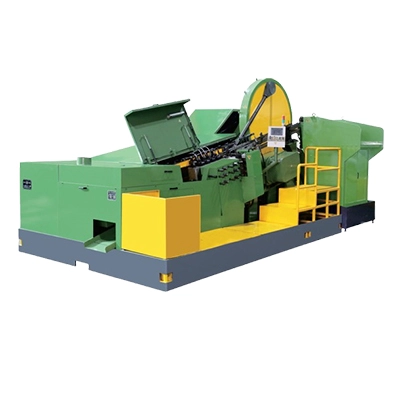 Thread Cold Rolling Machine
ST-4R-50 High-Speed Thread Rolling Machine ST-8R-83(120) High-Speed Thread Rolling Machine ST-6R-80 High-Speed Thread Rolling Machine ST-4A-50 High-Speed Thread Rolling Machine ST-4A-25 High-Speed Thread Rolling Machine ST-10N-150 High-Speed Thread Rolling Machine ST-30N High-Speed Thread Rolling Machine ST-60N(M16-150) High-Speed Thread Rolling Machine ST-60N(M16-200) High-Speed Thread Rolling Machine ST-12N-150 High-Speed Thread Rolling Machine ST-3A-25 High-Speed Thread Rolling Machine ST-3 High-Speed Thread Rolling Machine ST-80N High-Speed Thread Rolling Machine ST-90S High-Speed Thread Rolling Machine ST-100-M40 High-Speed Thread Rolling Machine ST-70N End Milling Machine
Thread Cold Rolling Machine
ST-4R-50 High-Speed Thread Rolling Machine ST-8R-83(120) High-Speed Thread Rolling Machine ST-6R-80 High-Speed Thread Rolling Machine ST-4A-50 High-Speed Thread Rolling Machine ST-4A-25 High-Speed Thread Rolling Machine ST-10N-150 High-Speed Thread Rolling Machine ST-30N High-Speed Thread Rolling Machine ST-60N(M16-150) High-Speed Thread Rolling Machine ST-60N(M16-200) High-Speed Thread Rolling Machine ST-12N-150 High-Speed Thread Rolling Machine ST-3A-25 High-Speed Thread Rolling Machine ST-3 High-Speed Thread Rolling Machine ST-80N High-Speed Thread Rolling Machine ST-90S High-Speed Thread Rolling Machine ST-100-M40 High-Speed Thread Rolling Machine ST-70N End Milling Machine