Zhejiang Shengtuo Machinery Co., LTD

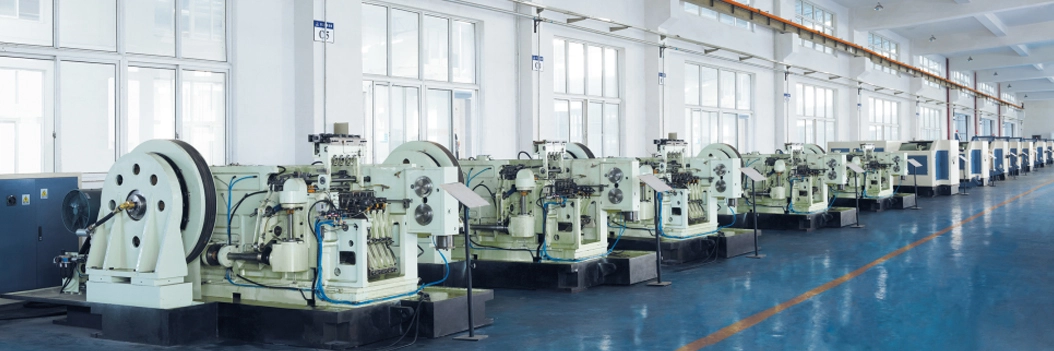
As an experienced bolt making machine manufacturer, Shinetop provides high-performance bolt former machines designed for the high-volume cold forming of bolts, bolt blanks, and customized special-shaped fasteners. Our bolt forming machine range includes 3-die 3-blow and 4-die 4-blow configurations, allowing manufacturers to select the appropriate forming sequence according to bolt diameter, length, head geometry, material, and production requirements. Across the STBF series, selected models cover fastener sizes from M6 to M30 and product lengths up to 355 mm, providing flexible automatic bolt making machine solutions for different fastener production needs.

Backed by ISO9001:2008 and CE certifications, our equipment is trusted by manufacturers in over 15 countries worldwide.

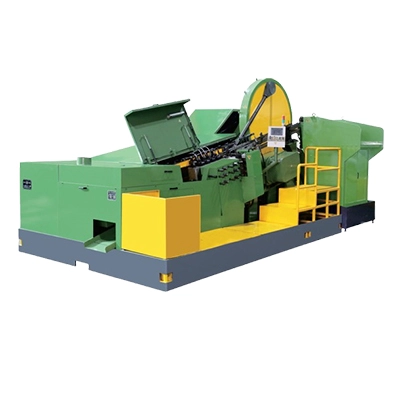
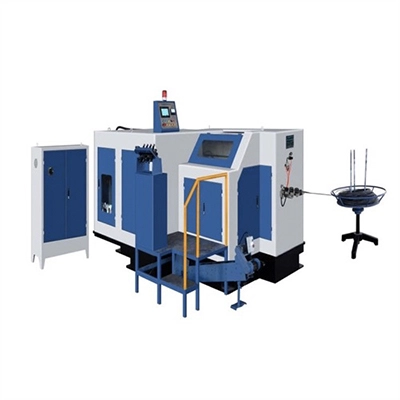
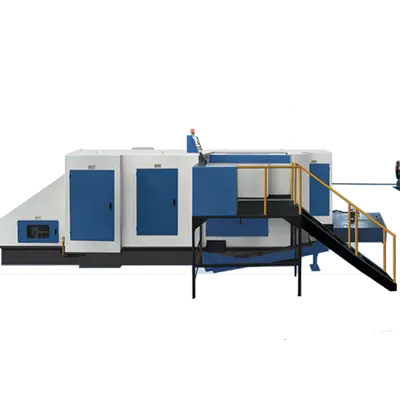
Different Types of Multi-station Bolt Forming Machine

What Can a Shinetop Bolt Former Machine Produce?

Bolt former selection starts with the finished component rather than the machine model.Shengtuo's STBF series is built around cold heading — a process that upsets, extrudes, and trims wire or rod...

Bolt former selection starts with the finished component rather than the machine model.

Shinetop's STBF series is built around cold heading — a process that upsets, extrudes, and trims wire or rod into finished fastener shapes across multiple die stations. Depending on the selected tooling (3-die 3-blow or 4-die 4-blow) and forming sequence, the series covers:

Hex-Head Bolts

Standard hex-head bolts are the core application, especially on the Three Die Three Blow machine. Machine size should be matched to finished bolt diameter, total length, head geometry and required output.

Socket-Style Fasteners

Internal-hex (socket) fasteners are also within scope, alongside standard external-hex products — sizing and tooling adjust accordingly for the recessed drive shape.

Long-Shank Bolt Blanks

The larger STBF models handle finished lengths up to 355 mm, so the series covers both short standard fasteners and longer bolt components without switching machine families.

Hollow, Solid, and Special-Shaped Parts

Beyond standard bolts and screws, the same tooling logic extends to hollow parts, solid special-shaped components, and fasteners requiring extra upsetting or extrusion steps. For non-standard geometries, the forming process is best evaluated from the finished-part drawing.

For broader production planning beyond the bolt former itself, see Shengtuo's fastener manufacturing equipment solution.

How Does a Multi-Station Bolt Forming Machine Work?

A multi-station automatic bolt making machine forms the product progressively instead of attempting to create the complete geometry in one operation.1. Wire FeedingWire is continuously supplied to the...

A multi-station automatic bolt making machine forms the product progressively instead of attempting to create the complete geometry in one operation.

1. Wire Feeding

Wire is continuously supplied to the machine through the feeding system according to the required blank length.

2. Cut-Off

The material is cut into a controlled blank before forming. Different STBF models provide different maximum cut-off diameters and cut-off lengths.

3. Sequential Cold Forming

The blank moves between forming stations through the transfer system. Each die and punch performs part of the required forming sequence.

A 3-die machine provides three forming stations, while a 4-die machine provides four.

4. Final Bolt Geometry

After the required forming operations have been completed, the component leaves the forming section as a bolt blank or formed fastener component.

5. Thread Rolling Where Required

When the finished bolt requires an external thread, thread rolling can follow the cold-forming operation as a separate production stage.

This combination of cold forming and subsequent thread rolling is commonly used in fastener manufacturing because the forming and threading stages perform different functions.


Bolt Forming Machine: The Excellent Choice for Efficient Manufacturing

The cold heading machine is a powerful assistant in industrial manufacturing. With its highly efficient and precise performance, it brings a brand-new production experience to enterprises.Powerful Pro...

The multi-station bolt forming machine from Shinetop is engineered for high-speed, precision bolt production, providing an efficient solution for modern industrial manufacturing. Ideal for producing a wide range of fasteners, including standard and specialized bolts, this machine ensures consistent quality and reduces material waste.

  • Powerful Processing Capacity

Equipped with multiple die and blow stations, the machine can quickly form raw materials into bolt blanks or finished components. The Three Die Three Blow and Four Die Four Blow bolt forming machines allow enterprises to optimize production for different bolt sizes and complexity, significantly improving output.

  • High Precision and Consistent Quality

Advanced die designs and precise control mechanisms ensure dimensional accuracy and stable product quality for every batch. This reduces the need for secondary processing and guarantees reliability across large-scale production.

  • Ease of Operation

The machine is user-friendly, with intuitive controls and automated feeding systems, minimizing labor costs and operational difficulties while maintaining smooth production flow.

  • Stability and Durability

Built with robust frames and high-quality components, ShengTuo bolt forming machines maintain excellent performance under continuous operation, offering long-term durability and minimal maintenance requirements.

  • Versatility in Handling Components

From small fasteners to larger bolts, the multi-station design easily accommodates a variety of sizes and shapes, providing flexibility for diverse manufacturing needs.

  • Competitive Advantage

Choosing a multi-station bolt forming machine ensures faster production, higher precision, and lower operational costs, helping your enterprise stay competitive in the industrial fastener market.


Three Die Three Blow vs. Four Die Four Blow Bolt Forming Machine

Three Die Three Blow vs. Four Die Four Blow Bolt Forming Machine
Comparison AspectThree Die Three Blow Bolt Forming MachineFour Die Four Blow Bolt Forming Machine
Mold Structure & Process QuantityThree molds, three punching processes in sequence: upsetting → pre-forming → formingFour molds, four punching processes; extra process allows more detailed forming, e.g., complex head shapes or special shank treatments
Product Forming CapabilitySuitable for relatively simple shapes and moderate precision, e.g., standard hex head boltsCapable of producing complex shapes and high-precision parts, e.g., special head shapes or shank treatments such as knurling
Production EfficiencyFor simple products, speed is similar to the four-die machineFor complex products, efficiency is higher; multiple processes distribute workload, enabling more complex parts per unit time
Cost & Application RangeLower cost, smaller footprint; ideal for SMEs producing standard parts for general mechanical connectionsHigher cost, larger footprint; suitable for high-quality, high-precision industries such as automotive and aerospace, producing fasteners for key components
  • Mold Structure and Process Quantity

The three-die and three-punch cold heading machine has three molds and conducts three punching processes in sequence. Generally, it first performs upsetting, then pre-forming, and finally forming. On the other hand, the four-die and four-punch cold heading machine has four molds and undergoes four punching processes. With one more punching process than the three-die and three-punch machine, it can perform more detailed processing on the product, having an advantage in forming complex-shaped heads or handling special treatments on the shank, for example.

  • Product Forming Capability

The three-die and three-punch cold heading machine is mainly used to produce products with relatively simple shapes and slightly lower precision requirements. For instance, common hexagon head bolts and other fasteners with regular shapes and not overly complex structures. The four-die and four-punch cold heading machine is capable of producing products with complex shapes and high precision requirements, such as parts with special head shapes (such as those with recesses, protrusions and other complex structures) or those requiring special processing on the shank (such as knurling).

  • Difference in Production Efficiency

When producing some simple products, the production speed of the three-die and three-punch cold heading machine may be similar to that of the four-die and four-punch machine. However, for complex products, the efficiency of the four-die and four-punch machine is higher. Because its multiple processes can better allocate processing tasks, reducing the processing burden on individual molds, thus enabling the production of more products that meet the requirements of complex shapes within a unit of time.

  • Cost and Application Range

The cost of the three-die and three-punch equipment is relatively low, and its occupied area may also be smaller. It is suitable for small and medium-sized enterprises to produce ordinary standard parts, and the application scenarios of the products are mainly in the fields of general mechanical connections where the shape precision requirements are not extremely high. The four-die and four-punch equipment usually has a higher price and may occupy a larger area. It is applicable to industries with high requirements for product quality and shape precision, such as the automotive, aerospace and other high-end manufacturing industries, for producing complex parts such as fasteners for key parts.

FAQs of Multi-station Bolt Forming Machine

  • Problem 1: Excessive Wear of Cold Heading Machine Molds

    - Causes:

    - The raw materials may be of poor quality, containing a relatively large number of hard impurities, which intensifies the friction on the molds.

    - The quality of the mold materials themselves is not good, and the hardness and toughness do not meet the ideal standards.

    - The punching frequency is too high and the single punching load is too large, causing the molds to be overused.

    - Solutions:

    - Strictly control the quality of raw materials and do a good job in the inspection and screening of raw materials.

    - Select high-quality mold materials and choose molds with appropriate hardness and toughness according to the product requirements.

    - Reasonably adjust the punching parameters of the cold heading machine to avoid excessive punching.

  • Problem 2: Product Dimensions Not Meeting the Precision Requirements

    - Causes:

    - The molds are not installed accurately, and there are deviations in the coordination between the molds.

    - The accuracy of the feeding mechanism of the cold heading machine is not enough, resulting in inaccurate delivery positions of the billets.

    - There are looseness or wear in the mechanical structure of the equipment itself, which affects the processing accuracy.

    - Solutions:

    - Reinstall and carefully calibrate the molds to ensure the precise coordination between the molds.

    - Inspect and debug the feeding mechanism to improve the feeding accuracy.

    - Regularly inspect and maintain the mechanical structure of the equipment, tighten loose parts, and replace worn parts.

  • Problem 3: Abnormal Noises During the Operation of the Equipment

    - Causes:

    - There is insufficient lubrication of the mechanical components, resulting in increased friction and noise generation.

    - Foreign objects have entered the interior of the equipment and collided with the rotating components.

    - Some components such as bearings and gears are worn or damaged.

    - Solutions:

    - Add lubricants in a timely manner according to the requirements of the equipment to ensure a good lubrication state.

    - Stop the machine to check and remove the foreign objects, and at the same time check whether the protective devices are intact.

    - Replace the worn or damaged components and regularly inspect the key components.

Get A QUOTE right now

Contact us to find out how our advanced multi-station cold heading forming machine engineering solutions.

We can help your business.